

Character info
The character
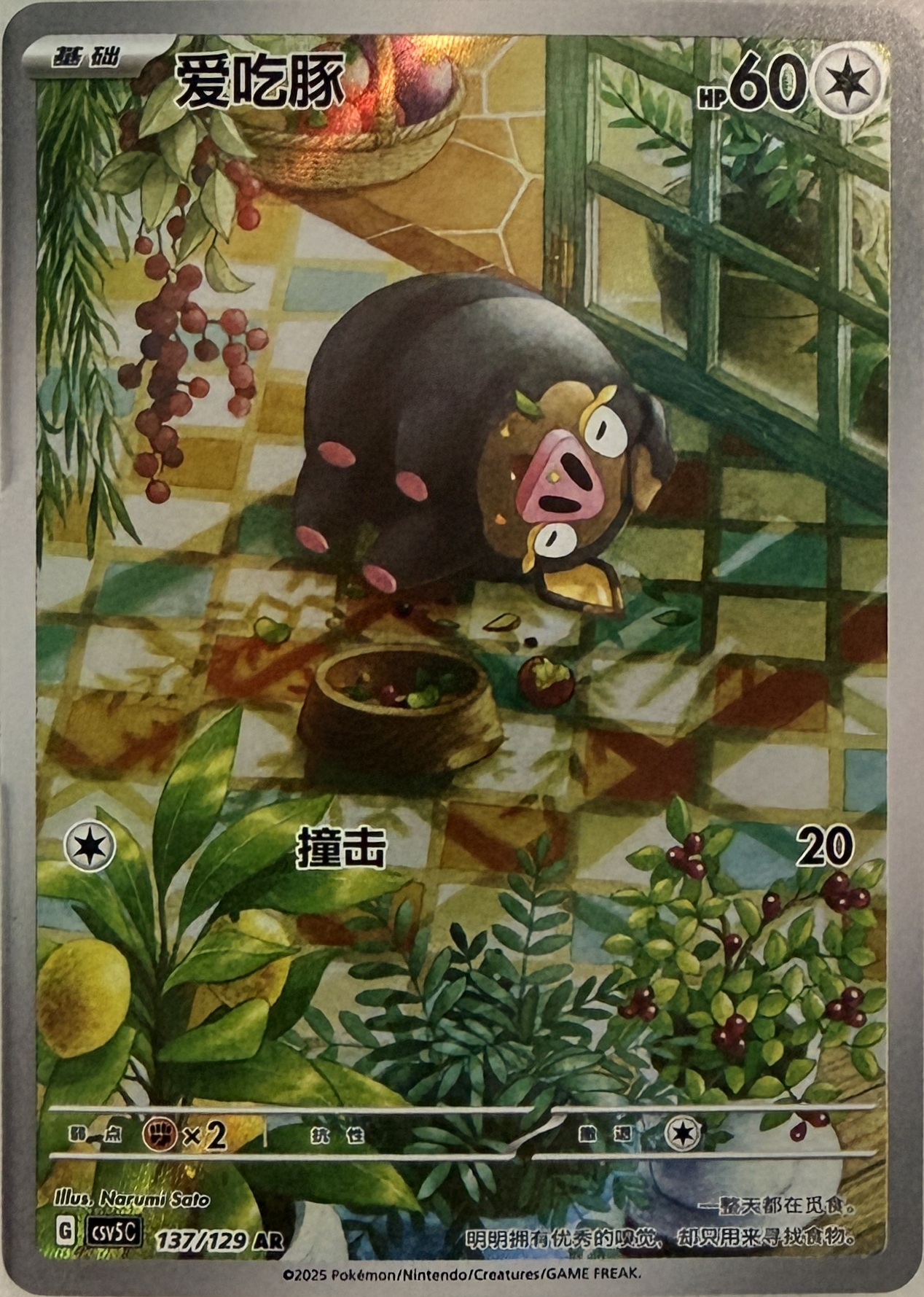
Lechonk is a Normal-type Pokémon introduced in the Paldea region. It is known for its keen sense of smell, which it uses almost exclusively to search for food rather than to detect danger. Its constant foraging and plump build have made it a popular, easygoing addition to the Pokémon roster.
This card
This is the AR (Art Rare) printing of Lechonk, numbered 137/129 in the CSV5C set, a Simplified Chinese language release from 2025. The full-art illustration by Narumi Sato depicts Lechonk rooting through a bowl of food scraps on a tiled floor surrounded by potted plants and hanging berries, with a woven basket of fruit visible in the background.
How it plays
This Basic Pokémon card has 60 HP and a Colorless typing. Its single attack, Tackle, costs one Colorless energy and deals 20 damage. The card lists a weakness to Fighting-type attacks (×2) and has a retreat cost of one Colorless energy.
Written with AI from the card and its catalogue entry, and checked by WinnTCG.
Share this card
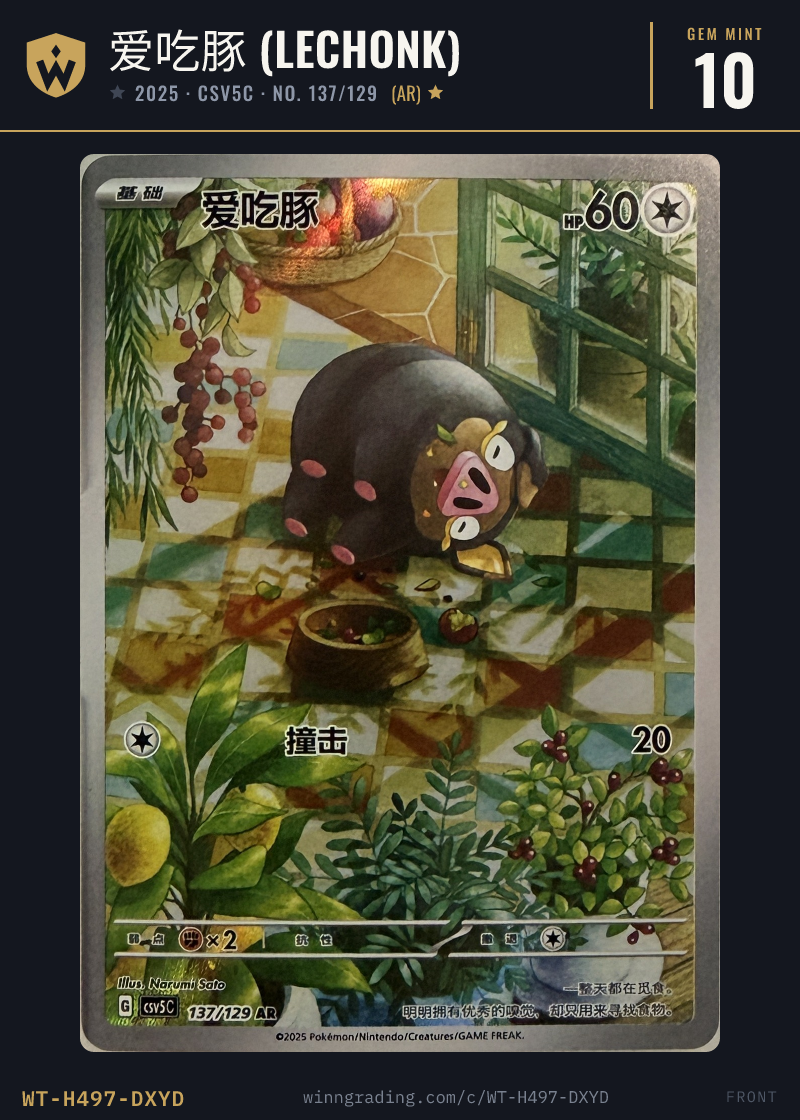
An image of the graded card, sized for eBay and social posts. The grade, the certificate number and the verification link travel with it.

Authenticity
WinnTCG authenticated this card in hand, on the bench, against genuine Pokémon cards. It was checked four ways: light shone through it to check the core, its weight on a scale, its thickness measured, and its print pattern and surface texture under magnification.
How this card was graded
WinnTCG graded this card in hand, on the bench. The card was in our hands, and we sealed the case ourselves. We photographed it here under controlled light to show which card is in the case and where anything we marked sits on it.
If you are buying this slab: the grade is WinnTCG’s judgement of the card that was in front of us, and WinnTCG sealed this case. The photographs above are of that card. Compare them against what you can see through the case, because a case can be opened by anyone who has held it since.
The working behind this grade
Every grade here is published with its reasoning. The report states what each measurement returned, what the model proposed on each axis, where the grader disagreed with it, and every defect marked on the photographs above.